

Art is often described as a universal language — something that transcends words, bridges difference, and invites connection. For three members of 🔗 Jane Goodall’s Roots & Shoots Youth Council USA, art is also a powerful tool for education, accessibility, and empowerment. Whether through theatre, music, or environmental crafts, Sidak, Matthew, and Emma are reshaping what learning looks like and who gets to participate in it. Their Roots & Shoots projects reveal a shared truth: when we lead with creativity, our communities flourish.
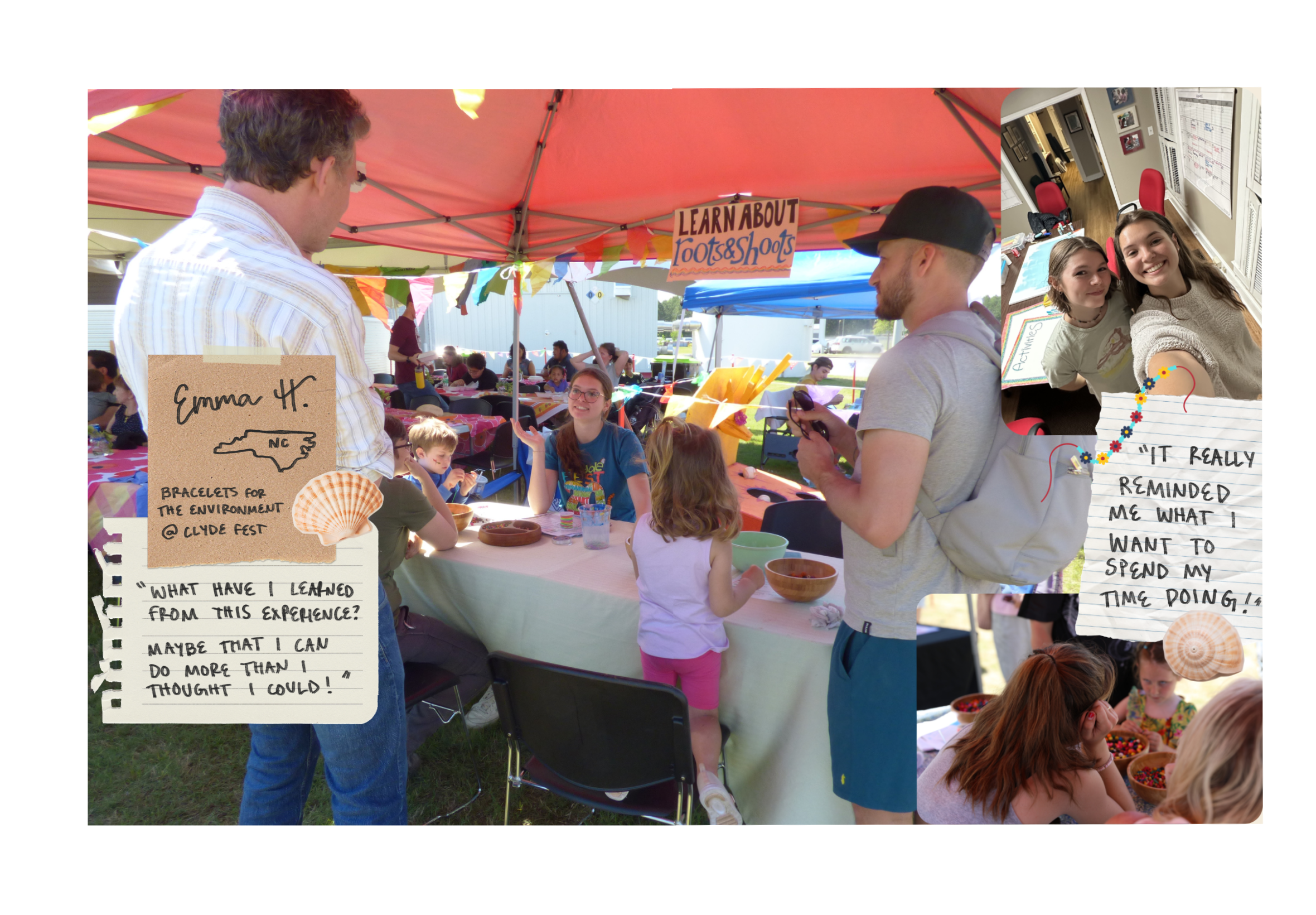
Four years ago, when 🔗 Emma H. was a high school senior, she started a project called “Bracelets for the Environment” at Clyde Fest, a folk art festival in North Carolina (pictured above). Now a college senior, she still leads the booth each year with the help of fellow Roots & Shoots member Virginia J. to make environmental education creative, hands-on, and fun.
Emma began volunteering at Clyde Fest at age 14 along with her friends and family, but she wanted to do more than assist with activities. She wanted to create something of her own. Her idea was to help kids learn about nature in a way that did not feel like school. The project began with wooden bead bracelets, each color representing a different aspect of the environment. Kids selected beads based on which part of the environment, water, trees, flowers, etc, that they wanted to protect the most. Emma would explain the meaning behind each bead and the role these environmental features play in maintaining a healthy planet. Each participant left with something they made and a new way of understanding sustainability.
This year, with support from a Roots & Shoots grant, Emma and Virginia expanded their booth to focus on marine life. They added real shells from Emma’s grandmother’s collection, creating a space where kids could touch natural materials and learn from them. “The best way to get people to care about the environment is to literally show them the environment,” Emma says.
They also introduced a communal art project, a large painted turtle inspired by folk artist Clyde Jones, the festival’s namesake. Kids and families covered it with bright tissue paper, which opened up conversations about conservation, community, and how small actions can inspire change.
For Emma, environmental education is most meaningful when it is personal, interactive, and joyful. “Caring about the planet should not be political. It should simply be normal,” she says. Her project is a reminder that meaningful learning can begin with color, creativity, and connection — both to the natural world, and to each other.
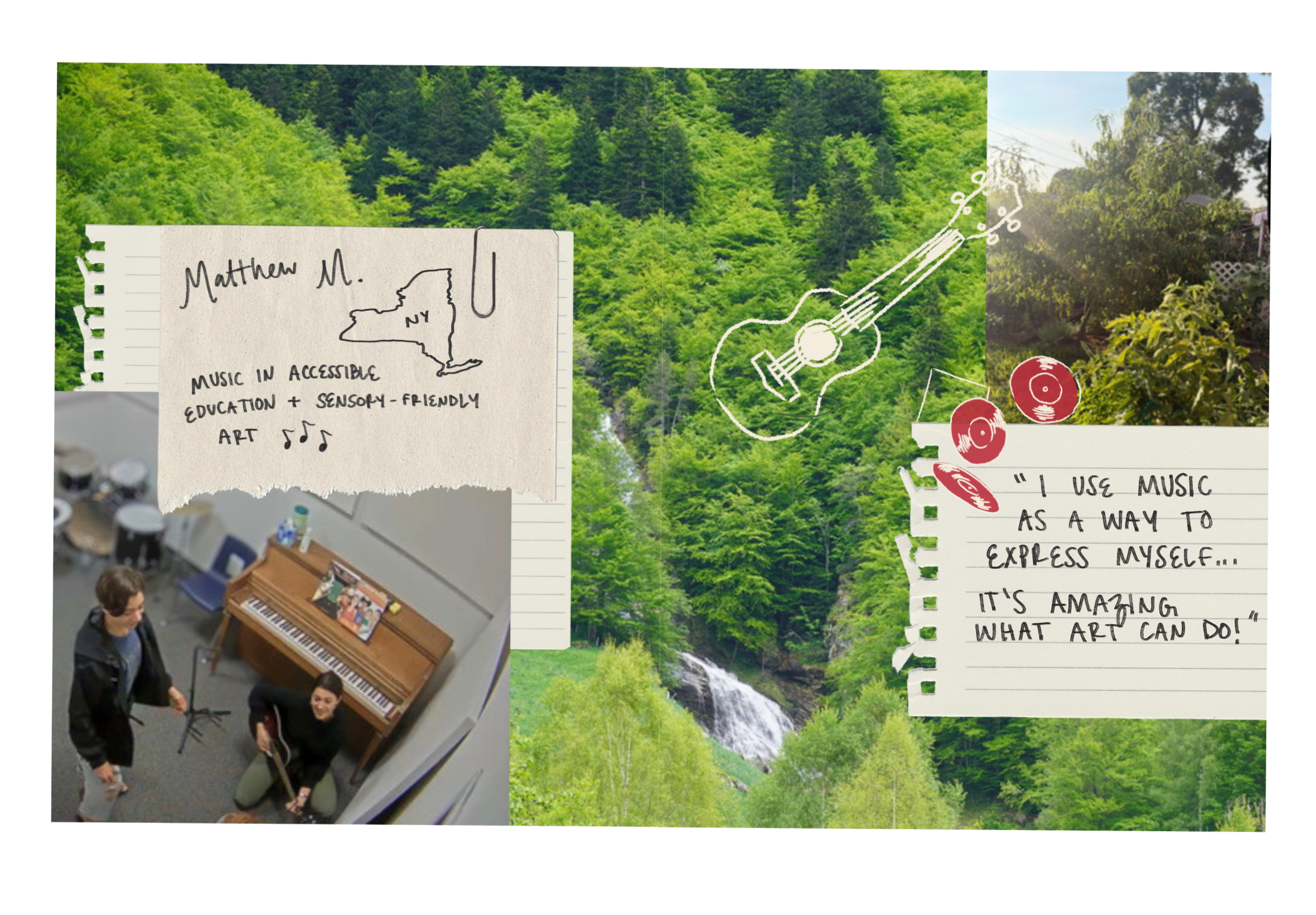
For 🔗 Matthew M., art has always existed in the form of sound. As a caregiver for his sibling with special needs, he has seen firsthand how music can open doors that spoken language sometimes cannot. His community action project centers on working with the Music Academy for Special Learners, using arts education to promote inclusion, advocacy, and communication. Through the program, Matthew helps introduce students to creative exercises that allow them to express themselves in ways that feel natural to them.
With support from a Roots & Shoots project grant, Matthew creates toolkits that include accessible instruments, sensory-friendly art materials, and simple guides to help caregivers and educators engage with students with special needs such as: sensory regulation, communication support, help with mobility limitations, or assistance with fine-motor skills. These toolkits allow his project to reach families outside his local community and help more students experience the benefits of music-based learning.
Matthew says the reaction from students is often immediate. Sometimes a steady rhythm on a drum or the chance to sing along with others becomes a pathway for students to be in community in ways they had not before. “It is amazing what art can do,” he says.
Music is his own outlet as well. Outside of his project, he uses it to process his own emotions, connect with his friends, and just make sense of his day-to-day life. “It’s a way to vent and express myself,” he says. Watching others experience that same freedom has reinforced his belief that creative expression should be accessible to everyone. Matthew’s identity as a first-generation Hispanic American and a caregiver also shapes his perspective. Growing up in a family where caregiving and cultural expression are important in daily life, he saw how music can bridge differences in language, ability, and life experience. For Matthew, this project is personal, and his own family experience continues to shape and motivate his Roots & Shoots work today.
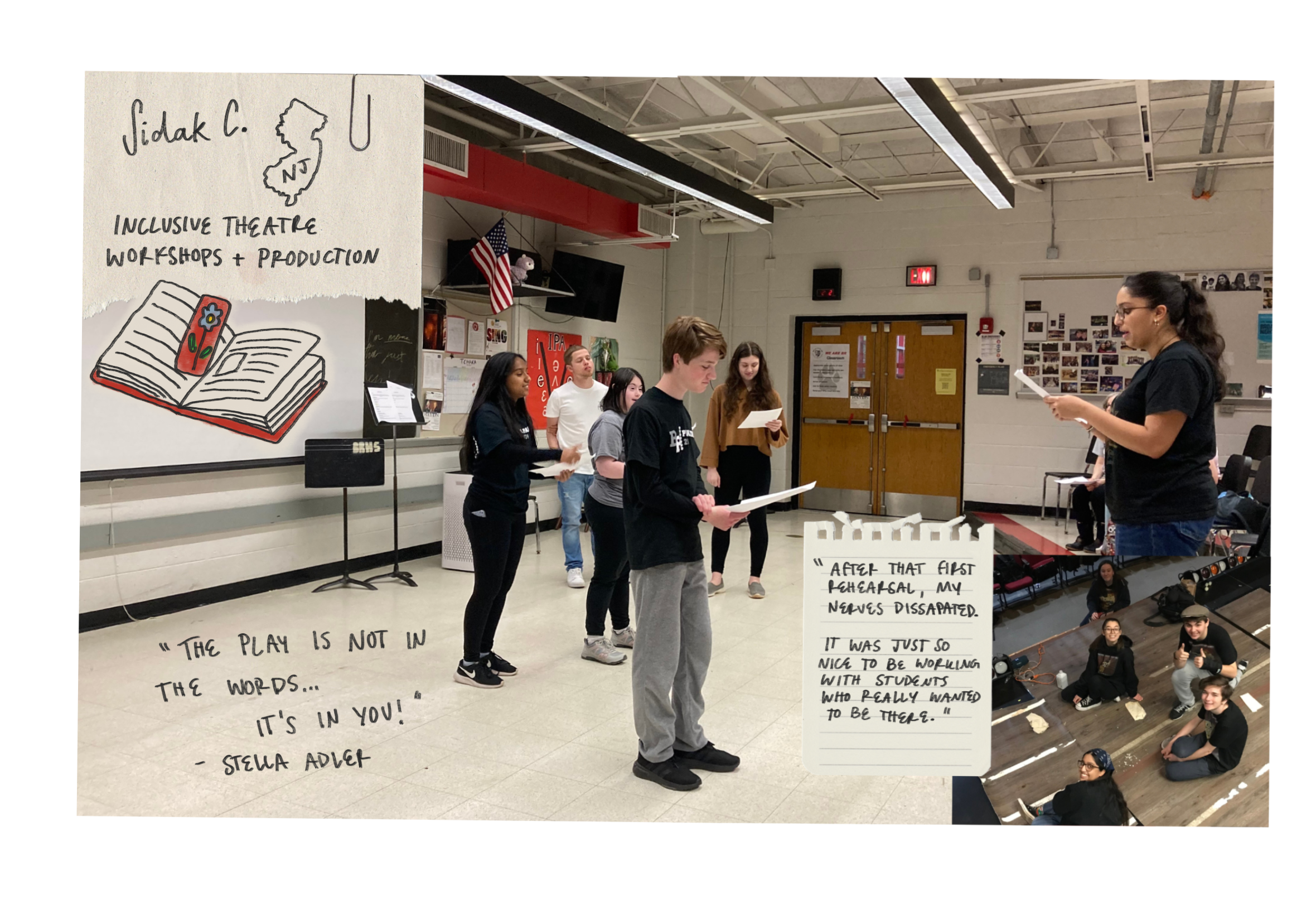
Where Matthew uses music to expand accessibility in creative expression, 🔗 Sidak C. turns to another form of storytelling. After years of performing in theatre, she noticed something troubling. Her school had inclusive sports programs for special education students, but nothing similar existed in the arts. Students with disabilities could audition for productions, but rarely continued with it, because rehearsal and performance settings were never designed with accessibility in mind.
Sidak decided to change that.
Working closely with directors, her theatre club, and the special education administration, she created a series of dance, singing, and acting workshops for students with disabilities who were interested in performing onstage. The goal was a final performance that placed these students at the center, each one paired with a partner from Sidak’s theatre club for support and collaboration.
At first, she wasn’t sure how many students would want to participate. “I wondered who would even want to be a part of this,” she recalls. But the uncertainty quickly disappeared once rehearsals began. Students showed up eager to move, sing, and start this new experience together.
Her project required rethinking nearly every aspect of the rehearsal process. She adjusted rehearsal times to align with bus schedules, shortened sessions when needed, and incorporated physical and music-based warm-ups to help ease students into the work. Instead of immediately jumping into memorizing lines, rehearsals included movement and collaborative exercises to help build comfort and trust among the cast. Traditional theatre settings can be overwhelming, with bright lights, loud sound systems, and large rooms. Sidak adapted the experience so everyone could participate comfortably. She chose a smaller performance venue, softened the lights, adjusted the sound levels, and made sure everyone could participate at their own pace, without overstimulation.
By the time the final performance day arrived, Sidak’s initial nerves had faded. “I was really nervous at first,” she says. “I didn’t want to mess anything up or for anyone to have a negative experience.” But seeing the participants’ excitement and collaboration throughout the rehearsal process, she realized she had nothing to worry about.
The impact of the performance extended far beyond the stage. Parents attended the show, and for many, it was the first time in years that they had seen their young adult children onstage. Many of the participants were between 18 and 21 years old and had not had opportunities like this since elementary school. The connections formed during the production continued after the show ended. One student even reached out afterward to stay connected with her theatre partner, turning a rehearsal partnership into a lasting friendship.
Sidak wrote the script, organized logistics, and led rehearsals. Through the project, she learned how to communicate with different departments, manage administrative challenges, and support students with a range of needs. Her focus was not only on accessibility but also on joy. “I wanted it to be fun,” she says. “Everyone should want to be there because they love theatre.”
Emma, Matthew, and Sidak show that art is more than expression. Each of them noticed a gap, and worked to fill it creatively. Through a bracelet, a drumbeat, or a spotlight, they are redefining how young people learn and interact with their communities. None of these projects began as large-scale initiatives. They began with simply paying attention to what their communities needed. Their projects prove that creativity can strengthen education, expand accessibility to the arts, and bring people together. When Roots & Shoots youth lead with imagination and empathy, they do more than complete projects. They open doors and create new possibilities for everyone.
Image credits: RSYC Fellow Ayushi G.

